In which buying a new fragrance triggers thoughts of things past…
Scent is the most mysterious, primal sense of all – have you ever had your mouth water and your tummy rumble at the aroma of frying bacon, or been fore-warned not to eat something in the fridge by an unusual odour? How about feeling comforted by the smell of your mother’s skin-cream, aroused by the scent of your lover’s hair or returned to your teenage years by the sweetness of candyfloss and popcorn?
This is the Proustian Effect, when a smell unleashes a flood of memories, taking you back to a particular time and place. The theory is named after the French writer Marcel Proust, who in his novel À la recherche du temps perdu(In Search of Lost Time) describes a character vividly recalling long-forgotten childhood memories after smelling a madeleine cake dipped in linden-blossom tea. Proust wasn’t actually the first to describe the ability of smells to trigger memory – experts suggest the link is due to the close proximity of the parts of our brains linked with processing smells, and those controlling emotion and memory.
Smell is so important – not just for everyday enjoyment, but as a basic human survival trait. Anosmia – the lack of a sense of smell as a result of medication, a head injury or even a very bad cold, can trigger depression and a withdrawal from life. In my short story Making Sense (there’s a podcast version of it available to listen free on my events page here), the heroine suffers from Hyperosmia, a massively heightened sense of smell, which leaves her able to ‘see’ traces of fragrance floating like colours on the air. I have a sensitivity to smell which leaves me searching around the house for stray abandoned socks, identifying mystery ingredients at a sniff, burying my nose gleefully in roses as I walk past my neighbours’ gardens, but which can leave me nauseous while in the throes of a migraine.
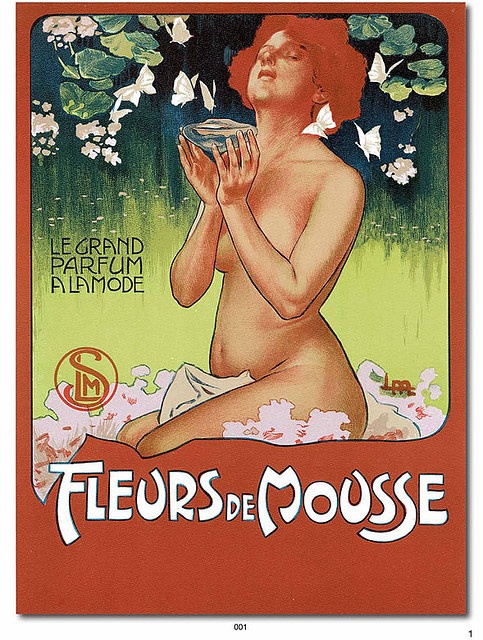
Art Nouveau style perfume ad – 1920s.
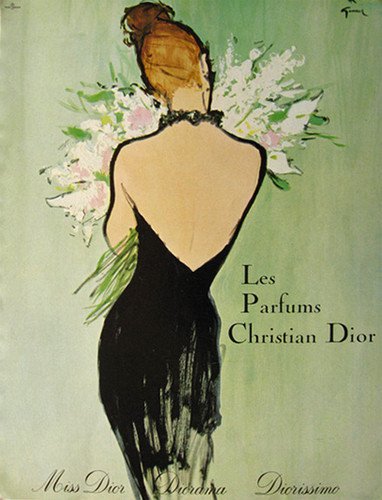
Scent has the power to sicken, stimulate, comfort or arouse and so it’s surprising that perfume features only fleetingly in literature. Oscar Wilde used exotic fragrances as an extended metaphor for decadent, tainted luxuriousness in ‘The Picture of Dorian Gray’ and scents feature in romance stories as easy shorthand for the sweetness of the heroine / manliness of the hero – but perfume is rarely the centre, the driving force of a novel. An exception is Patrick Süskind’s ‘Perfume – the story of a murderer’, which follows the ‘de-scent’ into madness of a perfume obsessive, determined to capture the fragrance of beautiful virgins – a hugely popular book which stayed on the bestselling lists in Germany for nine years. The film of the book was a disaster, possibly because film is utterly unable to capture the magic of scent (which is why perfume ads have always been glossy, glamorous fictions selling an imagined, potential lifestyle, rather than making any real attempt to explain what they actually smell like).
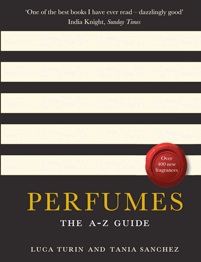
The best book written on perfume has to be ‘Perfumes – The A-Z Guide’ by Luca Turin & Tania Sanchez. A comprehensive guide to nearly 2,000 commercially-available perfumes, with descriptions and ratings, this isn’t just a handbook, but a fabulous read, full of flavour, humour and anecdotes – a love story to perfume in all its forms. Lauded by writers including Hilary Mantel and Joanne Harris, the book inspired a love story of its own; after corresponding via email, and writing the book together, the authors (a renowned biophysicist and a journalist) fell in love and married.
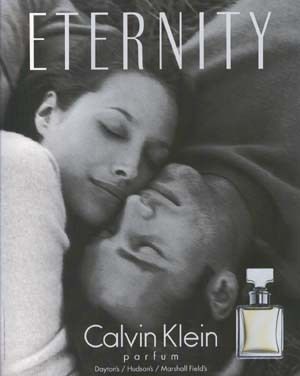
We wear perfume because we like the smell ourselves, because it reflects (we hope) something about our personalities, and for the reaction we hope the scent will trigger in others. I remember meeting an ex-boyfriend years after we’d broken up and him sniffing appreciatively and saying – “You smell exactly how I remember you!” It was a surprise, because I wasn’t wearing the romantic, expensive Calvin Klein Eternity he used to buy for me (I loved its weird blend of roses, white wine and TCP antiseptic), but basic old Body Shop White Musk, the safest, cleanest, most sensible scent there is, the teenage-girl perfume I’d been wearing when we’d first met, many years before.
Ahhh… The Body Shop. I’ve never quite forgiven them for abandoning their Dewberry range and then reformulating the divine, marzipan and Play-doh Vanilla scent of the 1980s into something that smells like a cheap car-freshener. But venturing into a Body Shop to buy some talcum powder for the Mother-in-Law, I idly spritzed my wrists with one of their offerings, and was blown away… The Body Shop’s Italian Summer Fig is a dead-ringer (or whatever the olfactory equivalent is) for one of my favourite perfumes, Premier Figuier by L’Artisan Parfumeur. Actually, this obscure but award-winning French perfume house makes several of my favourite perfumes – they’re famous for taking simple single notes, like smoky Lapsong Souchong tea, fresh figs or ripe blackberries and blending them into complex scents that smell delicious, fresh and real. But as I can seldom afford to splash out over £80 a time for their scents, this Body Shop ‘smell-a-like’ seems like an absolute bargain at a fraction of the price.
I’ve been happily wearing it on and off for several years now, and it always feels delightfully fresh and summery. The composition of the fragrance, according to their blurb, “opens with sparkling, refreshing shades of green notes and vine leaves, combined with honey fruit figs. The heart adds floral flavors of rose spiced with saffron while the base calms down the floral-fruity union with warm, woody notes of oak and amber.” The language of perfume can be as pretentious as wine-tasting; to me, Italian Summer Fig simply blends the fresh outdoorsy smell of green leaves with sweet, powdery coconut-milk, smelling exactly like, well, a perfectly ripe fig. And that, as far as I am concerned, is a very good thing.
“Invention does not consist of creating out of void, but out of chaos….” Mary Wollstonecraft Shelley
Writers love an apocalypse, at least in theory. We’re fascinated with the means of our own destruction; a glance at TV listings and bookshelves reveals a multitude of stories about our possible end, whether by meteors or plagues or super-volcanoes.1 It’s as if by anticipating the worst possible scenario, we hope to fend-off that particular means of oblivion.
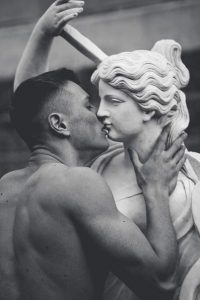
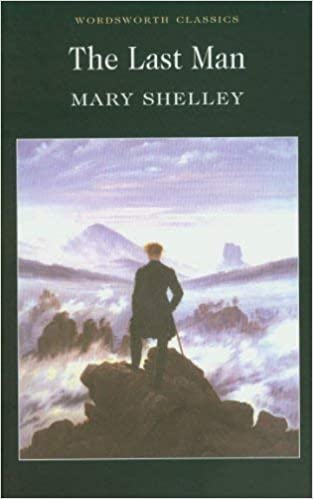
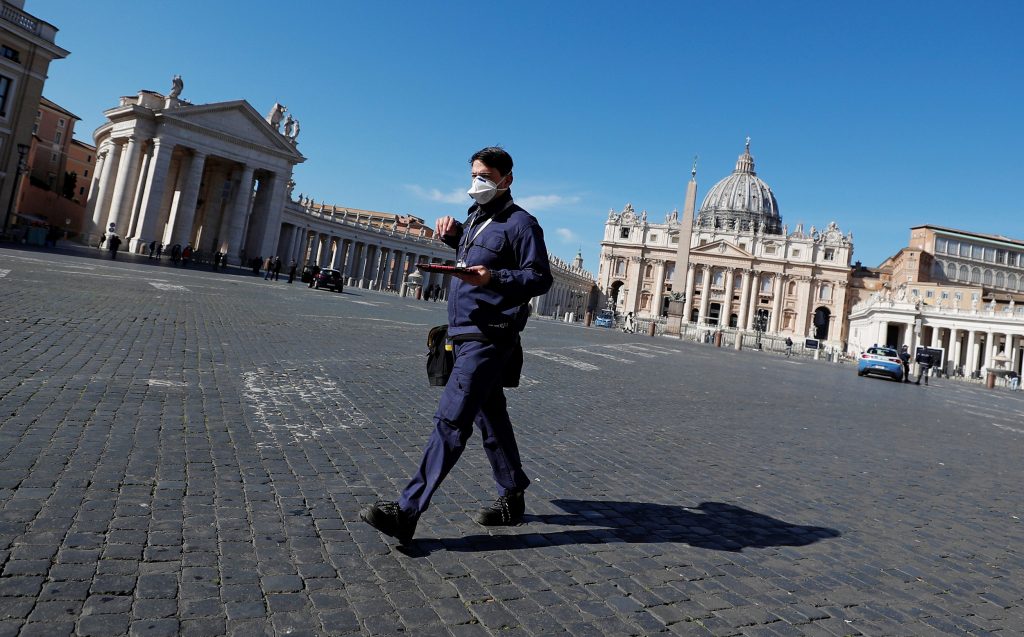
Mary Shelley is best remembered for Frankenstein’s monster, but her fourth novel, The Last Man, is the book that really lays bare her soul. Published in 1826, it has never been more timely, set in our 21st century and dealing with religious strife, civil wars, the destabilisation of world economies plus a pandemic that wipes-out the human race. Eerily reminiscent of our current situation, one of the most powerful and chilling images in the novel shows the last man on earth wandering the deserted streets of Rome, embracing the marble statues for companionship – the ultimate in social distancing.
It’s a novel of intense contradictions; starkly dramatising war, politics, plague and death, but also a desperately personal description of love, loss and survival in the face of annihilation. And while it has been stealthily influential, originating the sub-genre of apocalyptic novels, it remains less well-known than it deserves. Within this story, as with Frankenstein, each generation can discover their own predictions, find their own parallels; whether a parable for the ecology movement in the 1970s, or the spread of AIDS in the 1980s, or indeed today for the new global pandemic. There’s a uncanny coincidence in the nature of her apocalypse; a plague from the East. Her inspiration may have been a wave of cholera that was steadily advancing towards Europe following an outbreak in Bengal in 1817 – ironically, one of its last London victims, six years after she published the book, would be her own half-brother William.
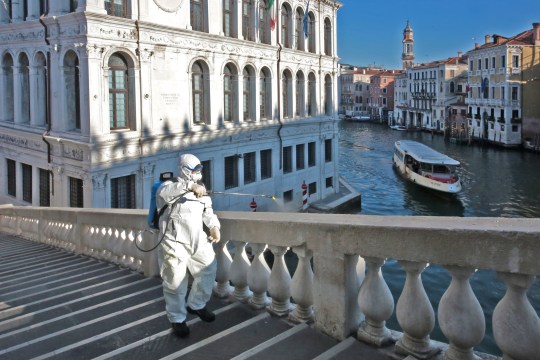
(Pic: Covid-19 Disinfection taking place in Venice (IPA/Backgrid))
Considering that the Shelleys and their circle had aimed to live in advance of the times, the social attitudes Mary describes in the 21st Century future-world of The Last Man are little changed from her day. But then, she wasn’t planning to write a novel pressing for political change, or a dire prophetic warning, though it is both; instead it is an outpouring of pure emotion, an extended and powerful metaphor for bereavement. At the dark heart of the story, the plague is simply a means of emptying the world; only by wiping-out the whole human race can she fully express the magnitude of her heartbreak.
The fabric of her life was tightly woven with loss, starting with her mother’s death just weeks after Mary’s birth. This tragedy became part of the myth which defined her; turbulent weather and a blazing comet in the night sky in the weeks before Mary’s birth were seen as a sign of hope by her expectant parents. In later life, Mary came to doubt this optimism, always aware she’d indirectly caused her mother’s death. By 1822, aged just 25, Mary had endured repeated miscarriages, the loss of three beloved children and her husband, Percy Bysshe Shelley, as well as the suicides of Shelley’s first wife and Mary’s own half-sister. It’s hardly surprising that Mary’s thoughts turned frequently towards oblivion. “Why am I doomed to live on seeing all expire before me?”2 she wrote, on hearing of her friend Byron’s death in 1824. To Mary, each bereavement felt unbearable, but the cumulative weight rendered her almost helpless.
The Last Man was also a way to explore feelings she dared not admit; her character Perdita (meaning ‘lost’), formerly a loving mother, commits suicide after the death of her husband, with no regrets for abandoning her children – a macabre wish-fulfilment for Mary. Her love for her last remaining child had seemed an oddly ambiguous blessing after her husband’s death: “You are the only chain that links me to time; but for you I should be free.”3 Mary’s hero in The Last Man, Lionel Verney, expresses his desire to “dash myself from some precipice and so close my eyes forever on the sad end of the world,” but eventually decides against suicide, “for the true fortitude was to endure.”4 Mary eventually found her own reasons to live; her writing, promoting her dead husband’s work and raising their last surviving child.
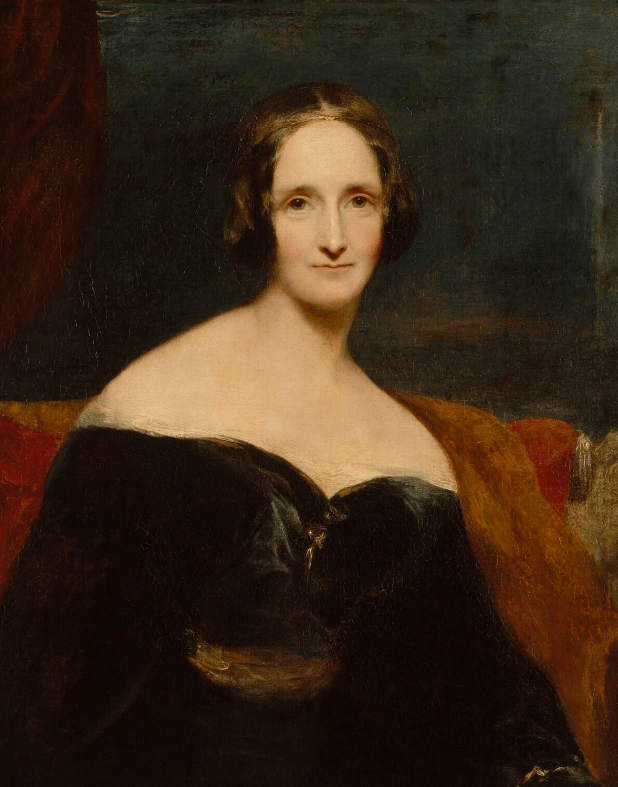
(Pic: Mary Shelley by Richard Rothwell – National Portrait Gallery)
While creation stories are richly detailed and common to almost all mythologies, the end of the world is more problematic. It’s written into cultures and lore from the Norse Ragnarök to the Kali Yuga cycle of Hinduism, and the apocalypse forms part of Christian belief, from Noah’s Flood to the “pestilence that creeps by darkness” of Psalm 91 and the end-times ecstasy of Revelations. The Last Man was not a wholly innovative theme, or even an original title, but in the politically turbulent years of the early nineteenth century, the idea took on a sudden relevance and urgency. In 1816, apocalyptically gloomy weather conditions following a volcanic eruption led to the ‘Year Without a Summer’, during which Mary created Frankenstein, and Byron’s poem Darkness imagined the end of all life on earth; “the world was void… treeless, manless, lifeless… a lump of death.” 5
Mary’s novel, coming at the tail-end of a sequence of ‘last man’ poems, wasn’t well-received, encountering savage and misogynistic reviews. One reviewer enquired snidely why she did not write instead “The Last Woman? She would have known better how to paint her distress at having no-one to talk to.”6 The reviewer also missed a vital point that her everyman hero’s survival instead of the more ‘celebrity’ characters mirrors Mary outliving her more famous male peers. The same unperceptive reviewer also criticised her “display of morbid feelings which could not exist,” 7 though the heightened emotions are the novel’s strongest element, torn from Mary’s own experience of grief.
The real horror of bereavement is its seeming permanence, its irreversibility, and while Christianity offers reassurance via resurrection, faith may not have consoled Mary after marriage to the ‘atheist’ Shelley. Mary was one of the first writers to portray an apocalypse completely outside God’s control, where neither science nor organised religion offer any defence. Her scientist is intellectually fascinated by the plague, but oblivious to the human cost until his own family dies, while Christianity becomes corrupted by a fanatic who takes advantage of the terror for his own ends.
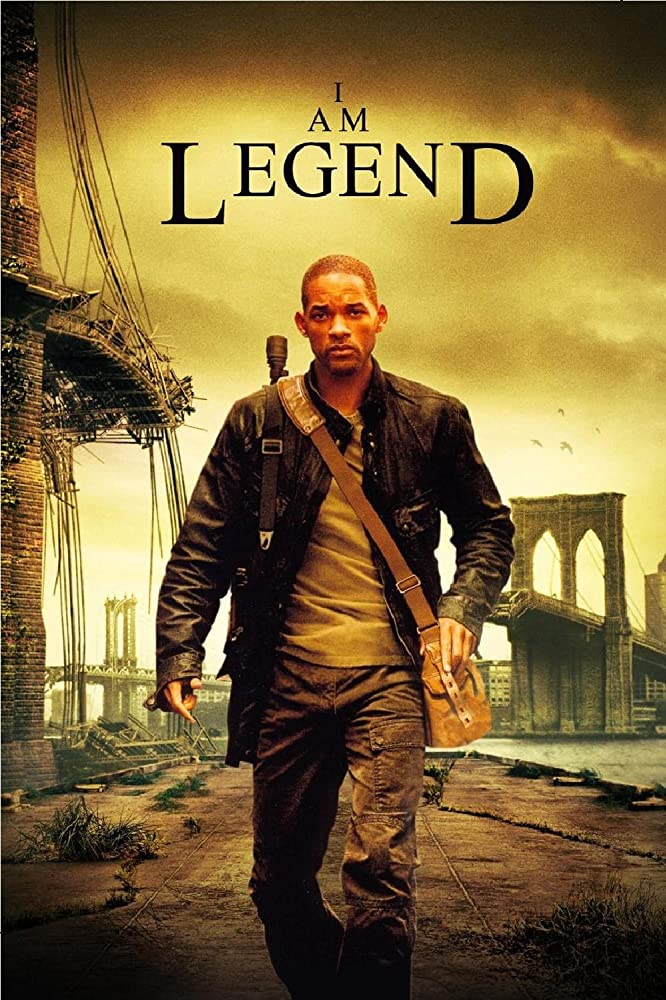
The difficulty with wiping-out humanity is that it is almost unimaginable; Mary Shelley’s was the first novel to fully fictionalise this and her vision still feels bold – it’s very rare, even in the most recent end-times explorations, for any ‘last man’ to be truly alone. A recent movie claimed to bring the book up to date but is nothing like the original story; following a man-made smallpox epidemic, its hero ‘becomes the strongest man alive and begins to gun down the cannibalistic survivors.’ Similarly-themed movies including I am Legend, The Omega Man and even The Last Man on Earth have also been reluctant to make their heroes entirely solitary, portraying (inevitably) macho human survivors battling zombies or vampires. 8
The difficulty with wiping-out humanity is that it is almost unimaginable; Mary Shelley’s was the first novel to fully fictionalise this and her vision still feels bold – it’s very rare, even in the most recent end-times explorations, for any ‘last man’ to be truly alone. A recent movie claimed to bring the book up to date but is nothing like the original story; following a man-made smallpox epidemic, its hero ‘becomes the strongest man alive and begins to gun down the cannibalistic survivors.’ Similarly-themed movies including I am Legend, The Omega Man and even The Last Man on Earth have also been reluctant to make their heroes entirely solitary, portraying (inevitably) macho human survivors battling zombies or vampires. 8
Mary Shelley isn’t interested in the technology that preoccupies most sci-fi adventures, though her characters do travel long-distance by hot-air balloon, a delicious first step towards the Steampunk genre. Reviewers noted that her future world seemed little different from her own time, calling it “an elaborate piece of gloomy folly”9 while expressing outrage at the ‘unfeminine’ strength of her perceptive criticisms of politics, warfare and destruction. But in our age of global terrorism, it seems far-sighted that nearly 200 years ago, she rightly predicted the historical strife between Christian and Muslim would not be settled in her century.
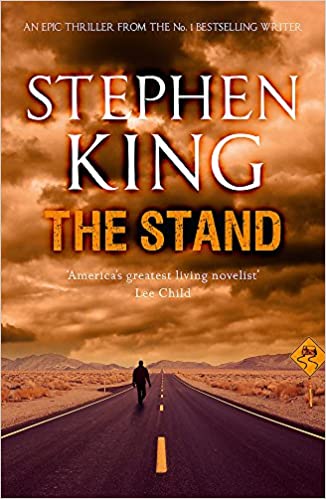
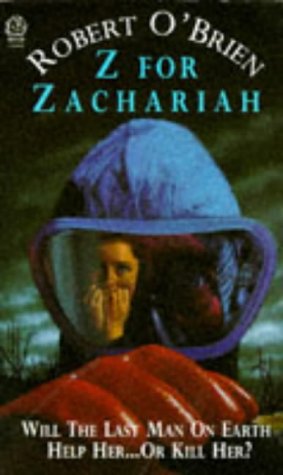
More recent ‘end-days’ stories have followed Mary’s lead in exploring the biggest themes and concerns of their day – an apocalypse offers a chance to start afresh while commenting on the evils of contemporary society. Stephen King’s compelling classic The Stand offers a creepy re-enactment of biblical themes of good versus evil following an influenza pandemic. Z for Zachariah, a 1975 children’s story, offers a Cold-War vision of the earth as a nuclear wasteland; as Adam was the first man, so Zachariah is the last man, his plans for re-populating the earth in his own image scuppered by the courageous last girl. The graphic novel series Y-The Last Man offers both a reflection of male anxiety in a progressively feminised society and a sort of twisted wish-fulfilment; when a mysterious virus targets only men, the hero Yorick and his pet monkey become the last male mammals, fought over by increasingly Amazonian women.
The end of the world is also used for exploring technological and environmental fears. For Stephen King (again) in Cell, mobile phone technology disables and brutalises humanity; in the Terminator films, our artificially intelligent robotic machines turn against us, while in M. Night Shyamalan’s film The Happening, nature itself rebels and causes man to self-destruct. Cormac McCarthy’s allegorical The Road comes closest to the horror and lyricism of Mary Shelley’s vision, showing little interest in the method by which Earth becomes depopulated and brutalised, focusing instead on the relationship of a father and son as they struggle to survive.
One thing Mary could not have predicted was that her creations would not only survive her death but become more culturally influential than those of her famous husband. Her writing was shrouded in obscurity during her lifetime – Frankenstein was published anonymously and initially assumed to be Shelley’s work, and her novels after his death were published as ‘By the Author of Frankenstein’ because Shelley’s scandalised father threatened to disinherit her son every time she used the Shelley name in print.
Mary Shelley’s particular genius was to take the personal fears and tragedies of her life and transmute them into stories that still stir us and feel relevant two hundred years later. Although its apocalyptic theme has been influential, The Last Man is essentially an extended metaphor for Mary’s own loss and grief, just as Frankenstein isn’t just a horror story, but a powerful allegory for her anxieties about procreation, childbirth and scientific experimentation. She made the link explicitly: “The Last Man! Yes, I may well describe that solitary being’s feelings… myself as the last relic of a beloved race…” 10 The process of fiction was a way of rationalising and recording Mary’s own tragedies, an age-old process of appeasement that all story-tellers recognise; “When death rumbles around wantonly, we tell a story to make sense of it. And when no deadly disease is rampant, we create our own horror stories… we need this story of risk.” 11
There’s another reason why the theme makes us subliminally uncomfortable – we cannot imagine ‘last-ness’, because the very fact we’re able to read the book means its hero cannot be the ‘last’. Mary neatly sidesteps this problem with an introduction where she (in the 19th Century) discovers an ancient prophecy that foretells the 21st Century story – though this adds another layer of uneasiness to the text. It’s deliberately enigmatic, as well as a clever novelistic device; we get a warning of what might happen, but it also offers the possibility that our future is not set in stone and we may still be able to change our path.
And so she ends the novel on a very faint note of hope – just as our pandemic led to smog-free skies and clear water in the canals of Venice, she writes of the natural beauty of the earth thriving after the death of human-kind. And despite the horrors suffered by her last man, he is still wistfully certain he will find a mate; “could I visit the whole extent of earth, I should find in some part of the wide extent a survivor.”12 Despite every misfortune life had thrown at her, Mary Shelley would not stop defying fate with the strength of her human spirit. The creative power of her imagination, of our collective imaginations, must always triumph over the urge to oblivion.
(Pic: Rome, March 2020. (REUTERS/Guglielmo Mangiapane))
1 A concern Mary Shelley would have recognised, for while she was in Italy during 1819, Mount Etna had one of its periodic eruptions, and she also toured the recently uncovered ruins of Pompeii. In another modern parallel, while Mary was writing this novel England was experiencing a major banking crisis, causing the bankruptcy of her financially precarious father. 2 Mary Shelley’s journal – 15th May 1824 3 Mary Shelley’s Journal – 5th October 1823 4 The Last Man – p219 (all page references for TLM are from the Wordsworth Classics Edition) 5 George Gordon, Lord Byron 1788 –1824 6 & 7 Literary Gazette and Journal of Belles Lettres – 18th February 1826 (No. 474 / p102-3) 8 The vampires are a foe that Mary’s admirer John Polidori would have appreciated – at the famous house party in 1818 that produced Frankenstein, he (with Byron’s prompting), penned a fragmentary tale ‘Vampyr’, one of the first vampire stories in English. 9 London Magazine – March 1826 p422. 10 From Mary Shelley’s journal – 14th May 1824. 11 From Dread – the history of epidemics – Philip Alcabes (2009) 12 The Last Man – p373

 Emma Seaman